


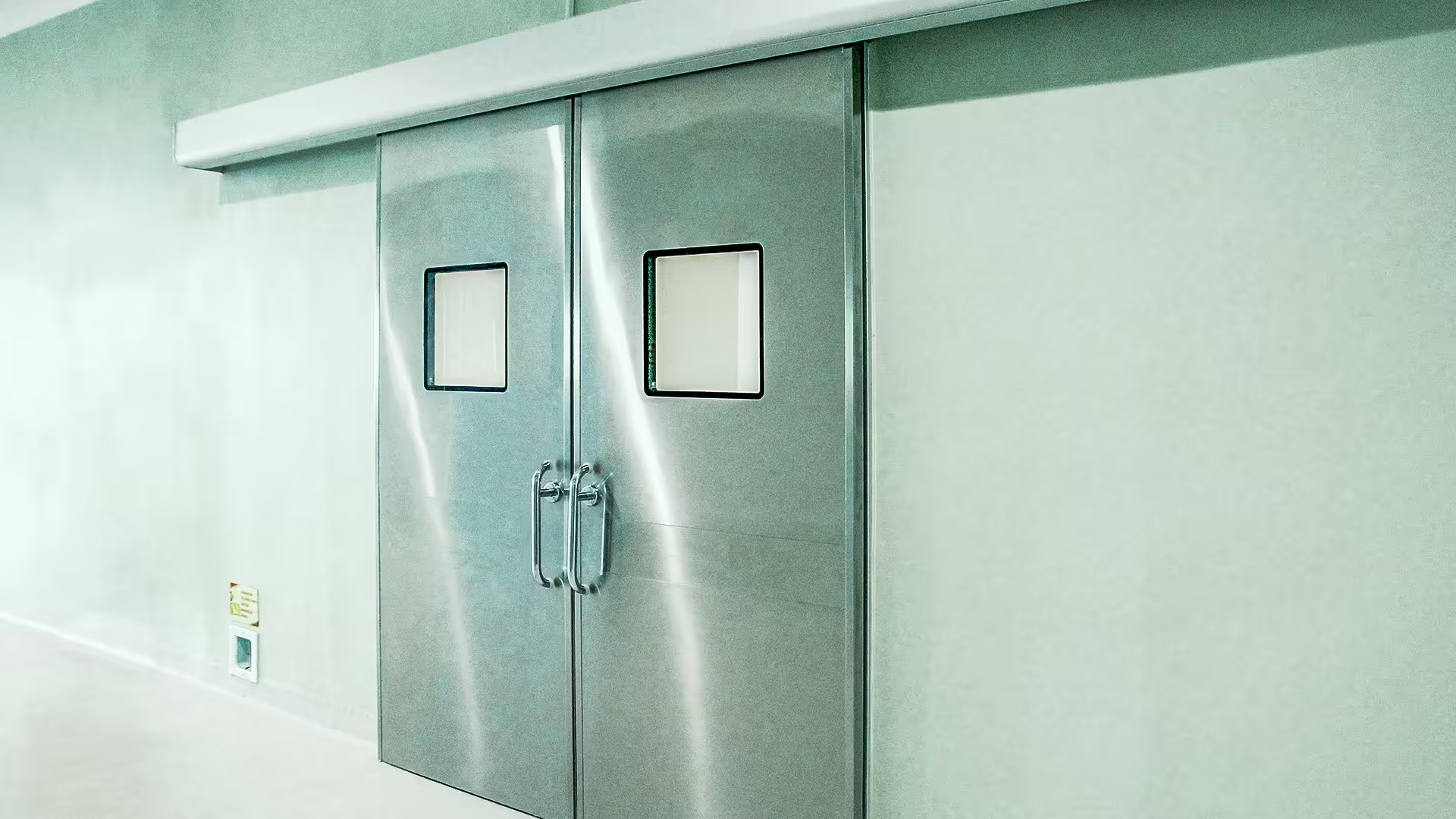
Securing the Surgical Environment: How Hospital Hermetic Doors Prevent Site Infections
Surgical site infections (SSIs) remain one of the most critical challenges in modern healthcare, leading to prolonged patient recoveries, increased medical costs, and severe post-operative complications. While hospitals enforce rigorous hand hygiene, instrument sterilization, and surface disinfection protocols, the physical architectural envelope of the operating room is frequently overlooked. Controlling the precise atmospheric conditions within a surgical suite is paramount. To achieve this, medical facilities must rely on specialized infrastructure, specifically Hospital Hermetic Doors, to secure the perimeter and lock out airborne pathogens.
The Invisible Threat of Airborne Contaminants
In any busy medical facility, the corridors are bustling with constant movement from patients, medical staff, transport stretchers, and supply carts. This high-traffic environment naturally harbors a wide array of microscopic contaminants, including bacteria, fungal spores, and viral particles.
Operating rooms are designed to combat this by utilizing advanced HVAC systems equipped with HEPA filters. These systems pump clean, conditioned air into the surgical suite to create a positive pressure gradient. The goal is to ensure that when a door opens, the clean air forcefully pushes outward, preventing the contaminated corridor air from rushing in.
However, this delicate pressure balance is highly susceptible to structural leaks. Standard swing or sliding doors possess inherent gaps along their perimeters and under their thresholds. Through these tiny crevices, positive pressure slowly leaks out, equalizing the room’s atmosphere with the hallway. Once the pressure drops, airborne pathogens can easily drift into the sterile zone, directly threatening the exposed surgical site.
The Mechanics of a True Hermetic Seal
To entirely eliminate these structural vulnerabilities, facility planners install Hospital Hermetic Doors. Unlike conventional commercial doors, hermetic systems are precision-engineered to create an impenetrable, 100% airtight vacuum seal when fully closed.
This absolute barrier is achieved through a highly sophisticated mechanical action. As the automated door leaf approaches the closed position, the heavy-duty track system physically guides the panel downward and inward simultaneously. This multi-directional shift forces the door tight against the wall frame.
-
- Continuous Perimeter Gaskets: High-elasticity silicone or EPDM rubber gaskets line the entire edge of the door leaf. The inward mechanical pressure compresses these gaskets tightly against the frame, instantly sealing any vertical or horizontal gaps.
- Automated Drop-Seals: At the exact moment of closure, a mechanical drop-seal deploys from the bottom edge of the door, pressing firmly against the finished floor to block under-door drafts.
- Pressure Resistance: High-quality systems are tested to maintain their seal even under significant pressure differentials (often up to 100 Pa), ensuring the HVAC system can maintain its positive gradient without forcing the door open.
Touchless Asepsis and Workflow Efficiency
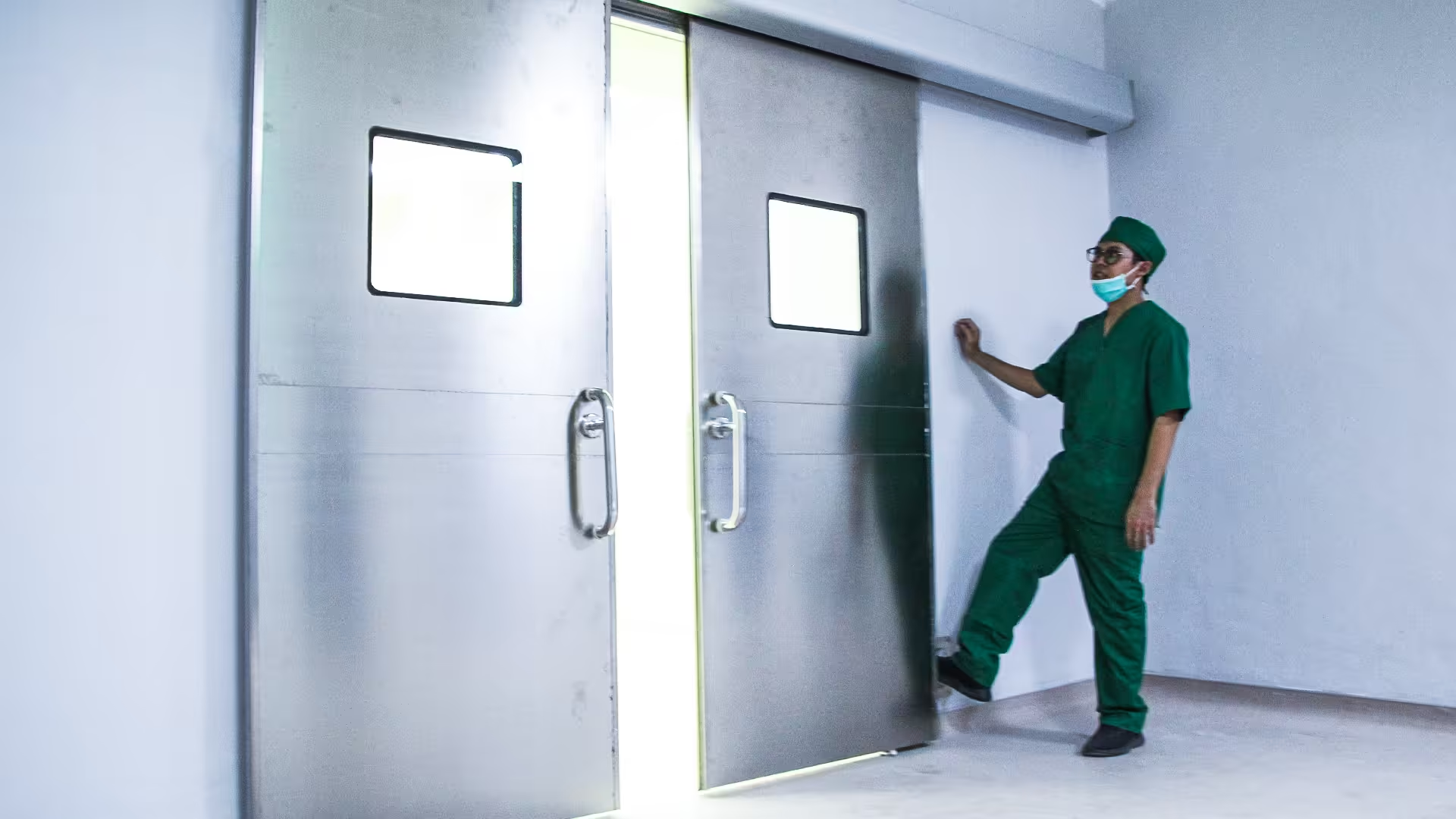
Beyond the airtight seal, physical interaction with architectural hardware is a primary vector for cross-contamination. A surgeon who has just completed a meticulous scrubbing routine cannot touch a traditional door handle without immediately compromising their sterile gloves.
Modern hermetic doors eliminate this risk entirely through integrated touchless automation. Advanced infrared hand-wave sensors are typically mounted at elbow height, allowing medical personnel to trigger the opening cycle with a simple gesture. Alternatively, heavy-duty capacitive foot switches embedded near the floorboard allow staff pushing heavy surgical carts or patient stretchers to navigate the entryway smoothly without slowing down or breaking sterility.
Built for Easy and Thorough Cleaning
Preventing infections means operating rooms must be cleaned constantly and thoroughly. The doors must be tough enough to handle strong cleaning chemicals without breaking down.
- Smooth and Seamless Design: These doors feature completely flush surfaces. Even the glass observation windows sit perfectly flat against the door. This eliminates cracks, hinges, or raised edges where dirt or bacteria can hide.
- Tough, Non-Porous Materials: Made from durable materials like stainless steel or high-pressure laminate (HPL), the door surfaces repel moisture. They can easily survive daily scrub-downs with harsh hospital-grade disinfectants without getting damaged.
Upgrading your hospital doors is a direct investment in patient safety. Standard doors simply cannot provide the airtight protection needed for sensitive medical procedures. By installing premium hospital hermetic doors, you ensure your facility meets the highest health standards. Explore the complete range of customized entryway solutions at Selaras Lawang Sewu to secure your critical medical zones today
 Indonesian
  English